Riparian Rights
Definition and meaning of Riparian Rights in real estate.
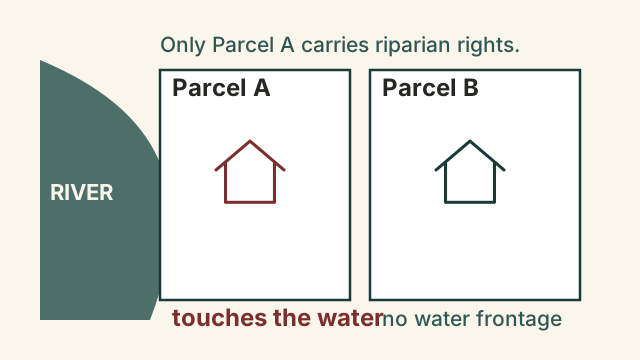
Riparian rights are the legal rights of a landowner whose property borders a flowing body of water, such as a river or stream, to use and enjoy that water.
In more detail
Under this doctrine, the landowner has the right to make reasonable use of the water for domestic purposes, such as drinking, washing, or watering a garden, as long as it does not obstruct the flow or harm downstream neighbors. These rights are attached to the land itself and transfer to the next owner when the property is sold.
Laws governing water use vary significantly by state, with Eastern states generally following riparian rules and Western states often using the doctrine of prior appropriation. Property owners must understand their local regulations before building docks or drawing water for irrigation.
Key facts
| Category | Legal, Titles & Closing |
|---|---|
| Applies to | Land adjacent to moving water like rivers, streams, and creeks |
| Ownership boundary | Typically extends to the center of the water source if it is non-navigable |
| Alternative system | Prior appropriation, which is common in dry Western states |
A homeowner owns land that borders a trout stream. They can build a small dock, fish, and draw water to irrigate their lawn, provided they do not construct a dam that blocks the stream's flow to properties downstream.
Frequently asked questions
Can a landowner sell their riparian rights separately from the land?
No, riparian rights are appurtenant, meaning they are legally attached to the land. They cannot be sold or transferred separate from the physical property.
What is the difference between riparian rights and littoral rights?
Riparian rights apply to flowing water like rivers and streams. Littoral rights apply to standing bodies of water, such as oceans, seas, and large lakes.
Related terms
Sources & references
See our sources and editorial standards.