Easement
Definition and meaning of Easement in real estate.
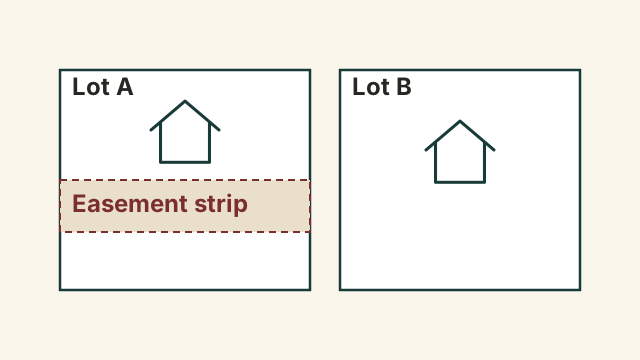
Easement is a legal right that allows one party to use a specific portion of another person's property for a designated purpose without owning the land. Easements are permanent, meaning they typically transfer with the property when it is sold.
In more detail
Common examples include utility easements, which permit electric or water companies to run lines through a yard, and access easements, which allow a neighbor to drive across a driveway to reach their own home. While easements do not give the holder ownership of the land, they restrict how the property owner can use that specific area.
For example, a homeowner cannot build a pool or a permanent structure over a utility easement. Understanding active easements is crucial during a purchase because they can affect property value and usage rights.
Key facts
| Category | Legal, Titles & Closing |
|---|---|
| Types | Appurtenant (benefits adjacent land) or in gross (benefits an individual or utility company) |
| Discovered via | A title search or a property survey |
| How created | Through a written agreement, a deed, or long-term historical use |
A homeowner has a utility easement on their property that allows the local power company to access and maintain power lines running along the back fence line.
Frequently asked questions
Can a property owner block or terminate an easement?
Generally, no, a property owner cannot block an easement once it is legally established. Terminating an easement requires mutual agreement, abandonment, or a court order.
Does an easement reduce property value?
It depends on the type and location of the easement, as a utility easement at the edge of a yard has little impact, while an access easement running through the middle of a lot could lower value.
Related terms
Sources & references
See our sources and editorial standards.