Setback
Definition and meaning of Setback in real estate.
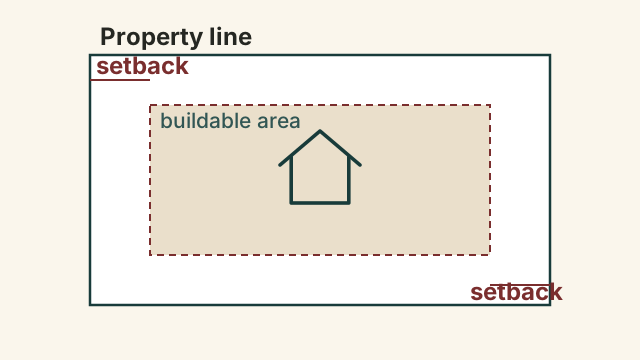
A setback is the minimum legal distance that a building or structure must be positioned from a property line, street, or environmental feature. Setbacks are established by local zoning ordinances to ensure safety, privacy, and aesthetic consistency within a community.
In more detail
These requirements apply to houses, garages, decks, and sometimes even fences or accessory structures, varying based on the zoning district. Local governments enforce setbacks to allow room for utility lines, emergency vehicle access, sidewalk clearance, and adequate sunlight and airflow between properties. Before constructing a home or adding an addition, property owners must check local codes to verify the required front, side, and rear setback measurements.
Violating these rules can result in fines, zoning violations, and in extreme cases, a legal requirement to demolish the non-compliant structure. In rare instances, homeowners can apply for a zoning variance if a unique property feature makes compliance impossible.
Key facts
| Category | Legal, Titles & Closing |
|---|---|
| Established by | Municipal zoning codes and subdivision regulations |
| Applies to | Primary dwellings, accessory structures, decks, and garages |
| Remedy for violations | Fines, building alterations, or applying for a zoning variance |
A homeowner plans to build a detached garage in their backyard but must design it to be at least ten feet away from the rear property line to comply with the local setback rule.
Frequently asked questions
What is a setback line?
A setback line is the invisible boundary on a lot map showing where construction is legally permitted relative to property lines.
Can you build inside a setback zone?
Generally no, unless you obtain a formal variance from the local zoning board, which typically requires showing proof of undue hardship.
Related terms
Sources & references
See our sources and editorial standards.